
No Hot Water? Common Causes and What Homeowners Should Know
No Hot Water? Start With the Most Common Causes
Few plumbing problems interrupt daily life as quickly as losing hot water. One minute your shower feels normal, and the next you are standing under cold water wondering what went wrong. For homeowners in Hiram, GA and surrounding areas, no hot water can quickly go from a small inconvenience to a major disruption.
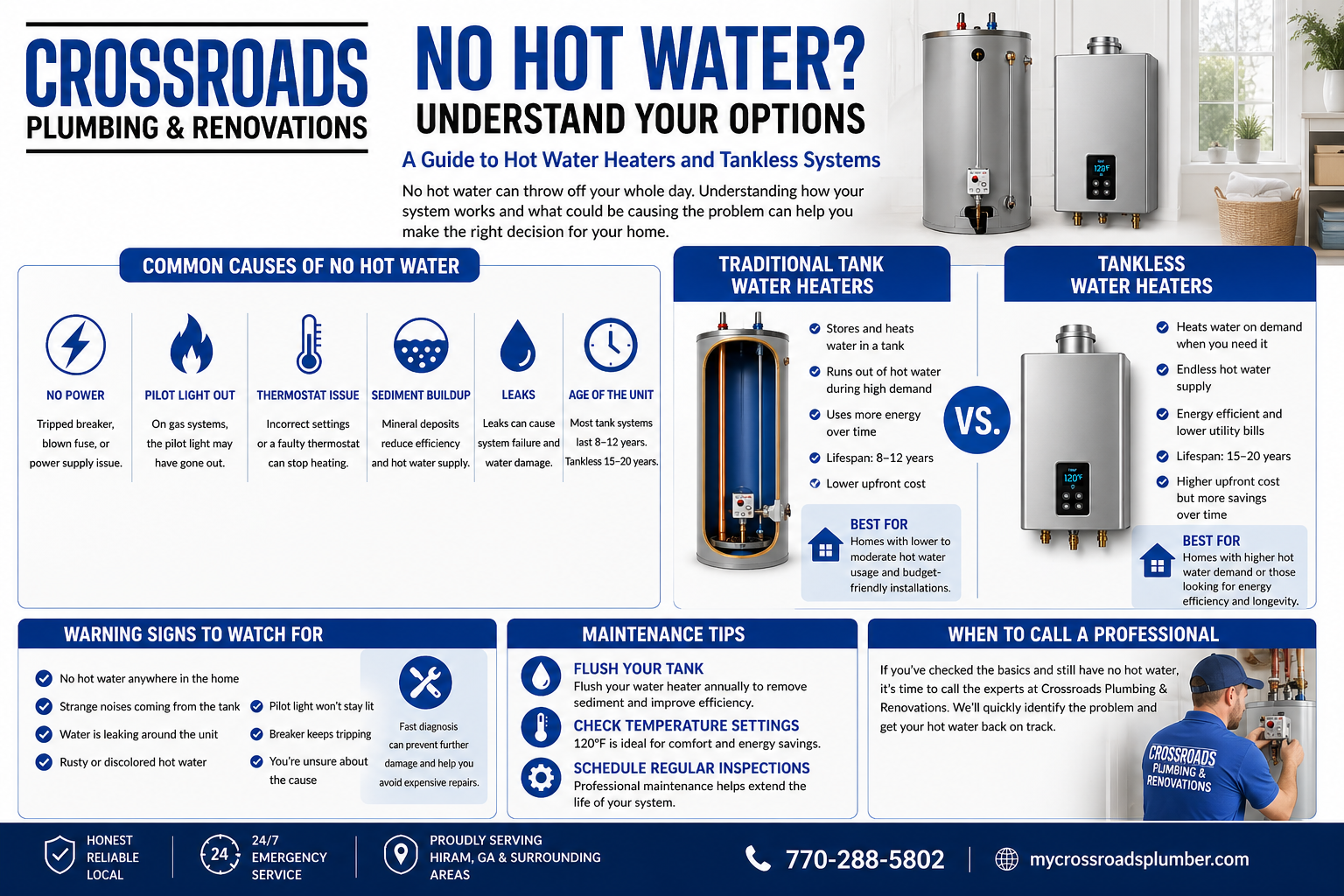
The cause of no hot water typically comes down to the water heater itself, but not always. The issue could be electrical, gas-related, mechanical, or even due to buildup inside the system over time. Understanding the most common causes helps narrow things down quickly.
Here are the most common reasons homeowners suddenly lose hot water:
- Tripped breaker on an electric water heater
- Failed heating element or thermostat
- Pilot light going out on a gas water heater
- Faulty thermocouple or gas control valve
- Sediment buildup inside the tank
- Water heater reaching the end of its lifespan
- Leaks or internal tank damage
- Excessive demand from multiple fixtures running at once
If there is no hot water anywhere in the home, the water heater is almost always the source of the problem. Electric systems rely on heating elements and power supply, while gas systems depend on a functioning burner and pilot light. When one of these components fails, hot water production stops completely.
One of the most overlooked issues is sediment buildup. Over time, minerals settle at the bottom of the tank, reducing efficiency and making it harder for the system to heat water properly. This buildup can also cause strange popping or rumbling noises and lead to long-term damage if ignored.
For homeowners in Hiram, Dallas, Powder Springs, Acworth, and surrounding areas, water quality and usage patterns can accelerate this buildup. Without routine maintenance like flushing the tank, performance will decline over time.
Crossroads Plumbing regularly handles these types of issues, whether it is a simple fix like resetting a breaker or a more involved repair like replacing heating elements or diagnosing a failing system.
Is It the Water Heater or a Plumbing Issue?
Not every hot water issue starts with the water heater. In some cases, the system is working properly, but something in the plumbing is preventing hot water from reaching certain fixtures. Knowing how to tell the difference can save time and help identify the problem faster.
Start by checking multiple fixtures throughout the home. Run hot water at sinks, showers, and tubs. This simple step can quickly tell you whether the issue is widespread or isolated.
Here is how to break it down:
- No hot water anywhere → likely a water heater problem
- Hot water in some places but not others → likely a fixture or valve issue
- Water gets hot but runs out quickly → tank capacity or sediment issue
- Weak hot water pressure → buildup or pipe restriction
- Water smells or looks discolored → possible tank corrosion or anode rod issue
- Hot water fluctuates → thermostat or heating component problem
Electric water heaters often show problems through breaker issues or failed elements. If a breaker trips once, it may not be serious. If it keeps happening, there is likely a deeper electrical issue that needs professional inspection.
Gas water heaters behave differently. If the pilot light goes out and will not stay lit, it could be due to a faulty thermocouple, gas valve, or airflow issue. These are not DIY fixes and should be handled carefully.
Another common cause is simply demand. Many homes outgrow their original water heater size. If multiple showers, laundry, and dishwashers are running at the same time, even a properly functioning system can struggle to keep up.
In these situations, homeowners often think something is broken when it is really a capacity issue. Upgrading the system or adjusting usage patterns can solve the problem.
Crossroads Plumbing & Renovations helps homeowners throughout Hiram and surrounding areas properly diagnose whether the issue is the water heater itself or something within the plumbing system.
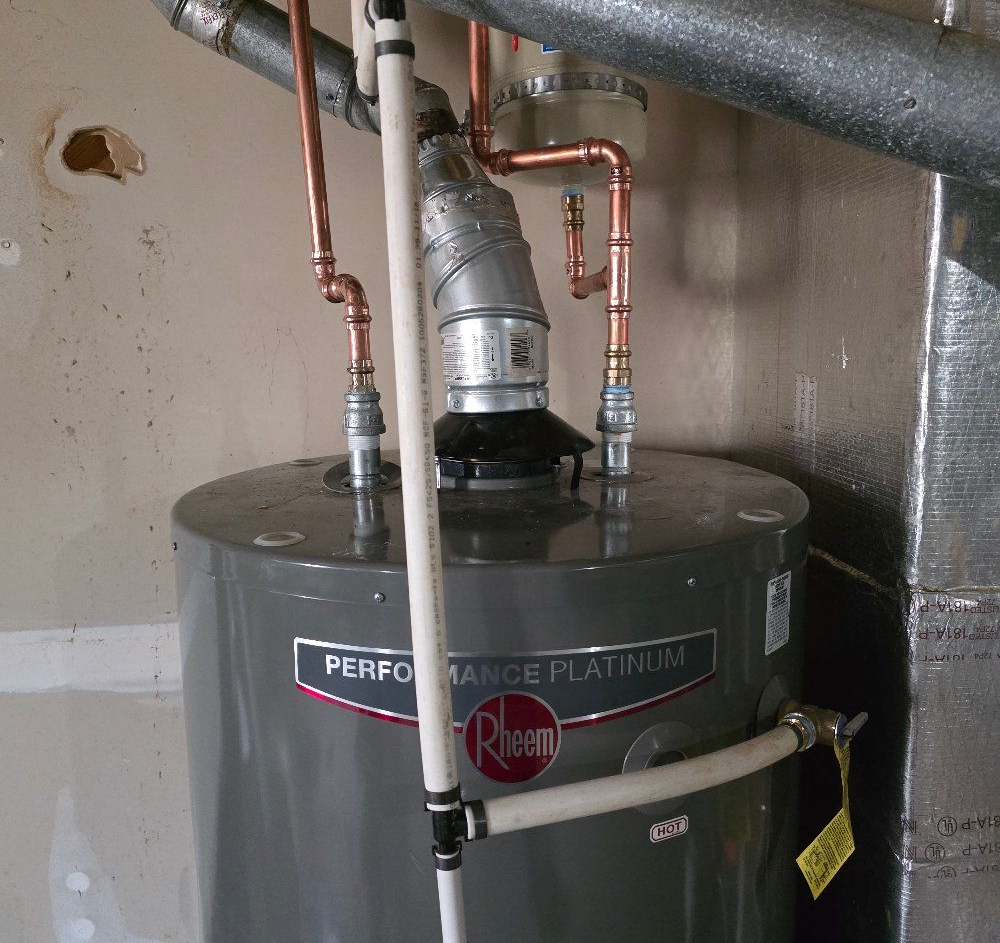
When to Repair vs Replace a Water Heater
Once the cause of no hot water is identified, the next step is deciding whether to repair the system or replace it. This decision usually comes down to age, condition, and the cost of repairs compared to replacement.
Most traditional tank water heaters last between 8 and 12 years. If your system is within that range or older, recurring issues may be a sign that replacement is the better long-term solution.
Here are some signs that a repair may be enough:
- Water heater is under 8 years old
- Issue is isolated (heating element, thermostat, pilot light)
- No visible tank corrosion or leaking
- System has been maintained regularly
And here are signs it may be time to replace:
- Tank is leaking from the base
- Water heater is over 10–12 years old
- Frequent repairs are needed
- Rusty or discolored hot water
- Reduced efficiency and rising energy costs
Leaks are especially important. If the tank itself is leaking, it cannot be repaired and must be replaced. Waiting too long can lead to water damage in the home.
Modern water heaters offer improved efficiency and performance compared to older units. In some cases, upgrading to a properly sized system or even a tankless option can solve ongoing hot water issues completely.
For homeowners in Hiram, Dallas, Powder Springs, Acworth, Villa Rica, Douglasville, and nearby areas, having a reliable plumbing professional evaluate the system is the best way to avoid guesswork.
Crossroads Plumbing & Renovations provides full diagnostics, repairs, and replacement recommendations based on what actually makes sense for your home and usage. Whether the issue is minor or requires a full upgrade, getting ahead of the problem prevents bigger issues down the line.
No hot water is never convenient, but with the right diagnosis and solution, it is a problem that can be resolved quickly and correctly.