Gas Line Problems in Your Home: Warning Signs Dallas and Hiram, GA Homeowners Should Never Ignore
How to Recognize the Early Signs of a Gas Line Issue
Natural gas helps power many of the appliances Georgia homeowners rely on every day. Water heaters, furnaces, fireplaces, dryers, ranges, and outdoor cooking areas may all depend on a properly installed gas line. When that line develops a leak, blockage, damaged connection, or pressure problem, the warning signs are not always as dramatic as people expect.
Some gas line problems are immediately noticeable, while others develop slowly over time. Aging materials, corrosion, loose fittings, soil movement, accidental damage, and previous renovation work can all affect the condition of a residential gas system. Homeowners in Dallas, Hiram, and surrounding Paulding County communities should know what to watch for so they can respond before a small issue becomes a more serious safety concern.
One of the best-known warning signs is an unusual sulfur-like or rotten-egg odor. Natural gas itself does not naturally have this strong smell, so utility providers add an odorant that makes leaks easier to detect. Even a faint odor near a gas-powered appliance, meter, fireplace, or utility connection should not be ignored.
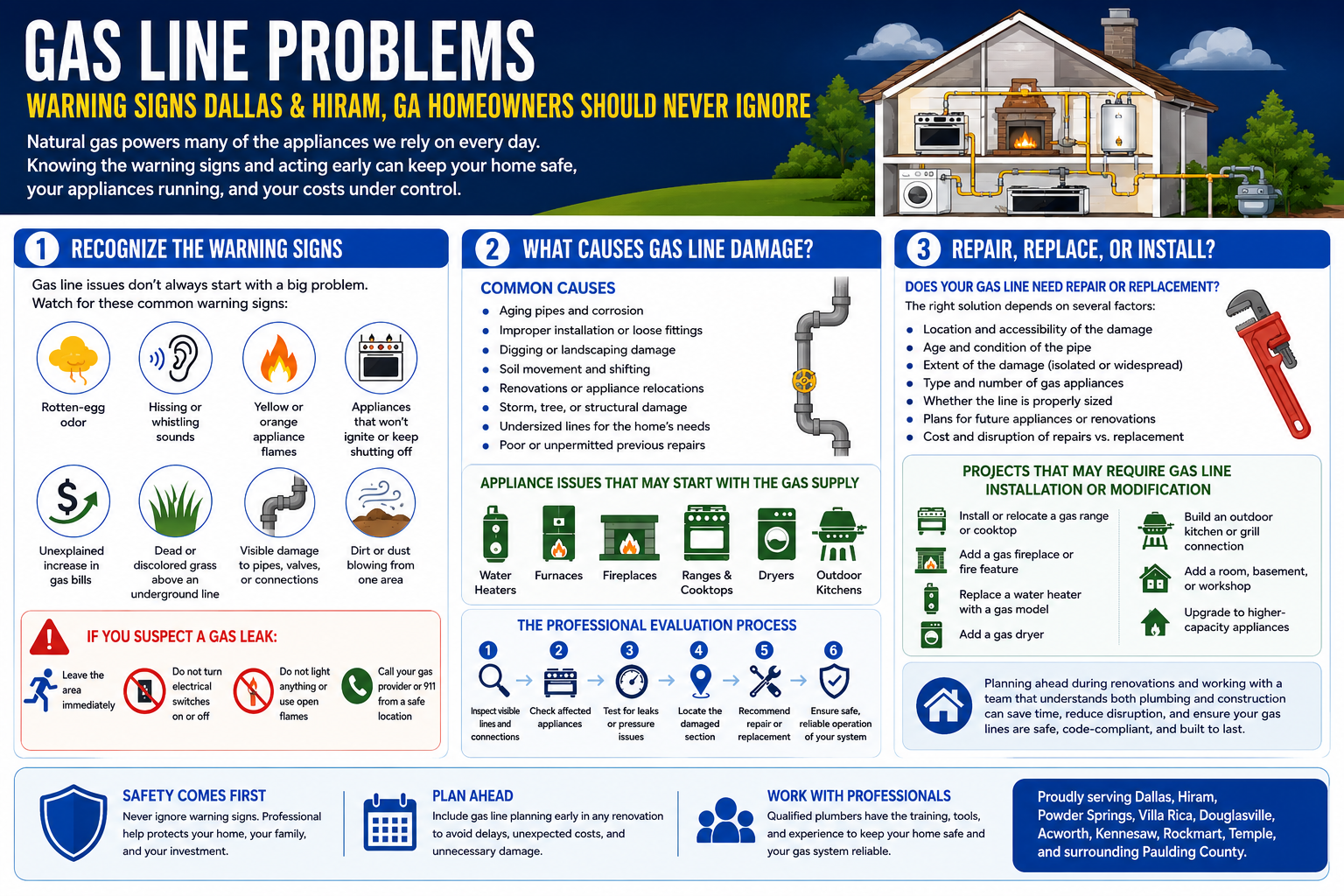
However, smell is not the only possible sign of trouble. A damaged gas line can also create changes in appliance performance, landscaping, energy usage, or sounds around the home. Common warning signs may include:
- A rotten-egg or sulfur-like smell inside or outside the home
- Hissing, whistling, or rushing sounds near a gas line or appliance
- Gas appliances that struggle to ignite or repeatedly shut off
- Burner flames that appear yellow or orange instead of steady and blue
- An unexplained increase in the monthly natural gas bill
- Dead or discolored grass near the path of an underground gas line
- Dirt, dust, or debris blowing from one area of the yard
- Physical damage to an exposed pipe, valve, connector, or appliance line
A single appliance that stops working does not always mean the home has a gas line leak. The appliance may have a faulty igniter, control valve, thermostat, or another mechanical issue. Still, when more than one gas-powered appliance begins acting strangely at the same time, the shared gas supply should be considered as a possible cause.
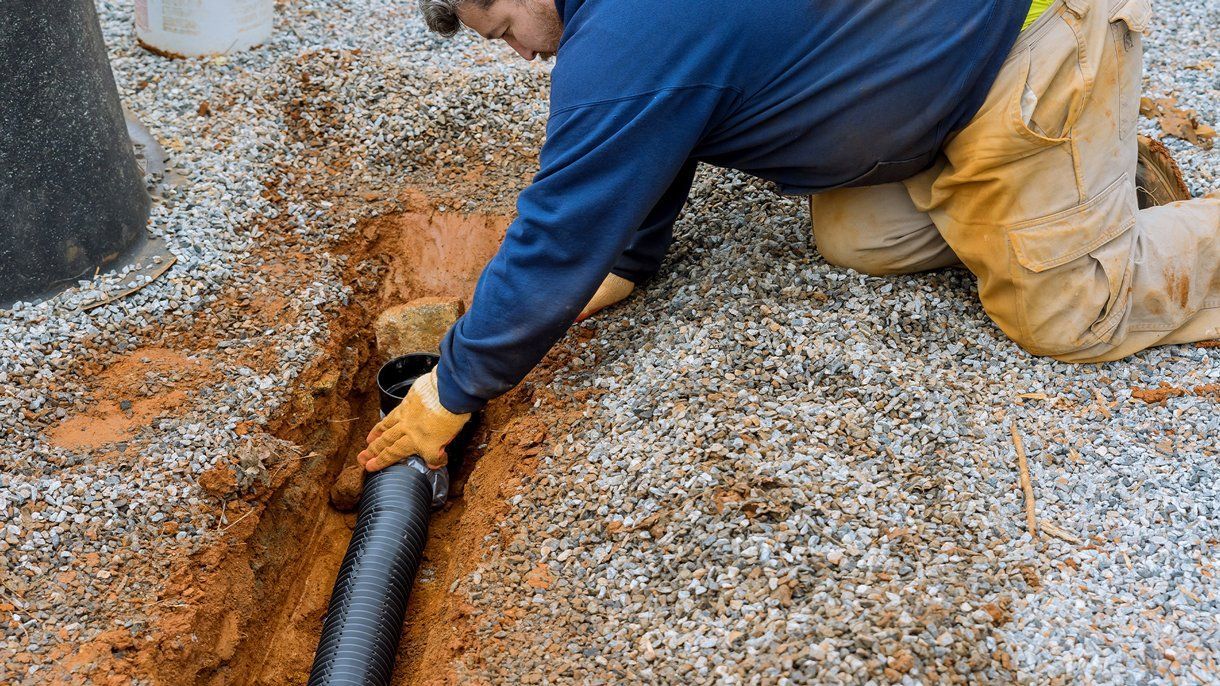
Homeowners should also pay attention after construction, landscaping, or renovation work. Digging for a fence, drainage system, patio, driveway, or new landscaping can damage underground utility lines. Indoor remodeling can also disturb appliance connectors or gas piping hidden behind walls and cabinets. Even when the damage seems minor, a qualified professional should evaluate the line before the appliance or system is used again.
It is important to recognize the difference between noticing a warning sign and attempting to locate the exact source yourself. Homeowners should never use a flame to test for a leak, tighten random fittings, or continue operating an appliance that may have a damaged connection.
If you strongly suspect an active gas leak, avoid turning electrical switches on or off, do not light candles or flames, and do not remain inside trying to investigate. Leave the property, move to a safe location, and contact the gas utility or emergency services as appropriate. Once the immediate area has been declared safe, a qualified plumber can inspect the residential gas lines and determine what repairs may be needed.
Taking gas line warning signs seriously does not mean assuming the worst every time an appliance acts differently. It means knowing when a situation deserves professional attention. A prompt inspection can help Dallas and Hiram homeowners protect their property, restore dependable appliance operation, and prevent a damaged line from creating additional problems.
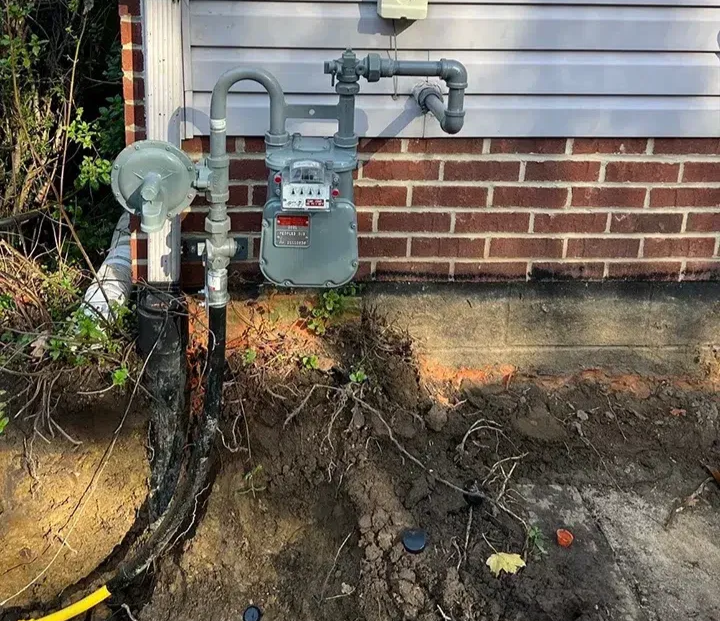
Common Causes of Residential Gas Line Damage
Residential gas lines are designed to provide years of dependable service, but they are not immune to wear, environmental conditions, accidental damage, or poor workmanship. Understanding why gas lines fail can help homeowners make informed decisions about inspections, repairs, and future renovation projects.
Age is one of the most common concerns. Older homes in Dallas, Hiram, Powder Springs, Douglasville, and other established West Georgia communities may still contain aging sections of piping, fittings, valves, or appliance connectors. A line does not automatically need replacement simply because it is old, but age can increase the likelihood of corrosion, deterioration, or outdated installation methods.
Moisture and corrosion can also affect certain gas line materials. Exterior pipes, underground lines, and connections located in damp or poorly protected areas may be especially vulnerable. Corrosion can weaken the pipe wall or connection gradually, which is one reason a problem may not become obvious until an appliance begins operating poorly or a leak is detected.
Other common causes of gas line damage include:
- Loose, worn, or improperly installed fittings
- Damage caused by digging, grading, or landscaping
- Movement in the soil around underground piping
- Impact from tools, stored items, vehicles, or construction materials
- Incorrectly sized piping for the number of connected appliances
- Improper appliance installation or relocation
- Unpermitted or poorly completed previous repairs
- Storm, tree, water, or structural damage around the property
Renovation work deserves special attention because homeowners often focus on the visible parts of the project. Moving a range, installing a fireplace, converting to a gas water heater, or building an outdoor kitchen may require much more than placing the appliance in the desired location. The gas line must be routed correctly, properly sized, securely connected, and tested before the appliance is put into service.
When Appliance Problems May Begin with the Gas Supply
When a gas-powered appliance stops working, it is natural to assume the appliance itself has failed. Sometimes that is true. In other cases, the actual problem begins with the gas supply, shutoff valve, connector, pressure, or piping leading to the appliance.
For example, a water heater that repeatedly loses its flame may have an ignition or thermocouple problem, but it could also be affected by an inconsistent gas supply. A gas range with weak burners may need appliance service, or the line may not be delivering the expected amount of fuel. A fireplace that is difficult to ignite could have a component problem, a blocked line, or a damaged connection.
This is why replacing an appliance before evaluating the full system can sometimes lead to unnecessary expense. If the new appliance is connected to the same damaged, undersized, or improperly configured line, the performance problem may continue.
A professional gas line evaluation generally includes several steps:
- Reviewing the symptoms reported by the homeowner
- Inspecting visible gas piping, valves, and appliance connections
- Checking the operation of the affected gas-powered appliances
- Testing the system for leaks or pressure-related concerns
- Identifying the location and extent of any damaged piping
- Recommending repair, replacement, or appliance service based on the findings
The goal is not simply to replace parts until something begins working again. A complete evaluation helps determine whether the problem is isolated to one appliance, one connection, one section of piping, or a larger portion of the gas system.
Homeowners should also mention any recent changes when scheduling service. A new appliance, kitchen renovation, room addition, outdoor living project, or previous plumbing repair may provide an important clue. The more information the plumber has, the easier it is to evaluate how the current piping is configured and where the problem may have started.
Because gas line work affects both safety and appliance performance, it should not be treated as a do-it-yourself repair. Professional testing and installation help ensure that fittings are secure, materials are appropriate, and the system can safely support the appliances connected to it.
Does Your Gas Line Need Repair or Replacement?
Discovering a gas line problem does not always mean the entire system must be replaced. In many situations, the damage may be limited to a connector, valve, fitting, or accessible section of pipe. A targeted repair may restore safe, reliable operation without changing the rest of the system.
In other cases, replacement may be the more practical long-term solution. This is especially true when the piping is significantly corroded, repeatedly leaking, improperly sized, difficult to access, or affected by widespread deterioration. A plumber should evaluate the condition of the existing line rather than making a recommendation based on age alone.
Several factors can influence whether repair or replacement makes the most sense:
- The location and accessibility of the damaged section
- The age, condition, and material of the existing pipe
- Whether the problem is isolated or present in multiple areas
- The number and type of gas-powered appliances in the home
- Whether the current line is properly sized for the household’s needs
- Plans for future appliances, additions, or renovation work
- The cost and disruption involved in repeated short-term repairs
Homeowners planning a remodel should consider gas line needs early in the design process. Waiting until cabinets, walls, flooring, or exterior finishes are complete can make utility changes more complicated. Coordinating the plumbing and renovation work from the beginning allows appliance placement, ventilation, access, and gas piping to be considered together.
New gas line installation or modification may be required for projects such as:
- Installing or relocating a gas range or cooktop
- Adding a gas fireplace or decorative fire feature
- Replacing an electric water heater with a gas model
- Adding a gas dryer in a new laundry area
- Building an outdoor kitchen or grill connection
- Adding a room, guest suite, workshop, or finished basement
- Replacing multiple appliances with higher-capacity models
The line must be planned according to the appliances it will serve. Adding several new gas appliances to an existing system without confirming its capacity can contribute to weak performance or unreliable operation. Proper planning helps ensure that each connected appliance receives the supply it requires.
Professional Gas Line Services in Dallas, Hiram, and Paulding County
Gas line problems require a careful, practical response. Homeowners need clear information about what is damaged, what caused the issue, and whether the best solution is a small repair, a larger replacement, or a new installation. They should also understand how the work may affect their appliances, walls, flooring, cabinets, landscaping, or renovation plans.
Working with a company that understands both plumbing and renovation can be especially helpful when utility work is connected to a larger home improvement project. Gas piping rarely exists in isolation. It may run behind cabinets, through walls, beneath floors, across unfinished areas, or underground to an outdoor feature. Planning the repair alongside the surrounding construction can help reduce unnecessary disruption and avoid having completed work opened again later.
Crossroads Plumbing & Renovations helps homeowners evaluate plumbing and gas line concerns with the full property in mind. Whether the issue involves an existing appliance, a suspected damaged connection, an aging section of pipe, or a renovation that requires a new gas supply, professional evaluation is the safest place to begin.
Homeowners can also help protect their gas systems by following a few simple habits:
- Schedule professional service when gas appliances begin behaving differently.
- Have underground utilities marked before digging on the property.
- Avoid placing heavy items against exposed pipes, valves, or connectors.
- Include gas line planning in the early stages of a renovation.
- Do not reuse questionable connectors or attempt temporary repairs.
- Respond promptly to unusual odors, sounds, or unexplained gas usage.
A gas line issue should never be ignored, but it also does not need to leave homeowners guessing about what to do next. A qualified inspection can identify the source of the problem, determine how much of the system is affected, and provide a clear path toward restoring safe operation.
If you need gas line repair, replacement, or installation in Dallas, Hiram, Powder Springs, Villa Rica, Douglasville, Acworth, Kennesaw, Rockmart, Temple, or a nearby West Georgia community, contact Crossroads Plumbing & Renovations. The team can evaluate the gas piping, explain the available options, and coordinate the work with related plumbing or renovation needs.
Addressing the problem early can help protect your home, support dependable appliance performance, and prevent a damaged or outdated line from interfering with future improvements. When something about your gas system does not seem right, professional guidance provides the answers you need without taking unnecessary risks.